









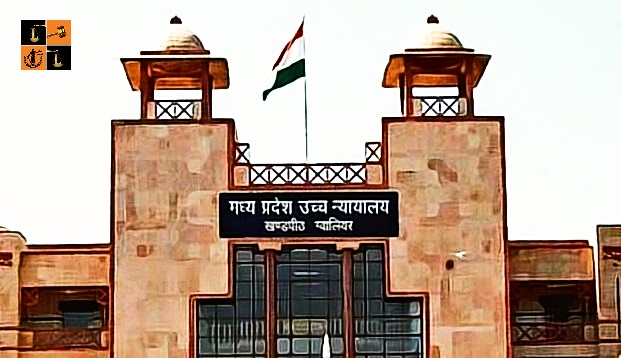
Recently, the Madhya Pradesh High Court reaffirmed that the constitutional protection against double jeopardy cannot be diluted merely because the objection is raised at a later stage of the proceeding. Exercising powers under Section 482 of the Code of Criminal Procedure, the Court held that once an accused has already faced prosecution for the same offence on substantially identical facts, a second trial would violate Article 20(2) of the Constitution as well as Section 300(1) of the CrPC. The Court emphasised that protection against double jeopardy is “not only a legal right but also a Constitutional and fundamental right.”
The case stemmed from allegations of forged bank drafts and cheating, leading to registration of offences under Sections 420, 467, 468 and 120-B of the Indian Penal Code. During the trial proceedings in Madhya Pradesh, the petitioner argued that he had already faced prosecution in Gujarat in relation to the same forged bank drafts and had also been convicted for certain offences arising out of that transaction. Invoking Section 300(1) of the CrPC and Article 20(2) of the Constitution, the petitioner sought quashing of the second prosecution on the ground that he could not be tried twice for the same offence. However, both the Trial Court and the Revisional Court rejected the plea primarily on the ground of delay, following which the petitioner approached the High Court under Section 482 of the CrPC seeking quashing of the subsequent criminal proceedings.
Appearing for the petitioner, Shri Girish Desai argued that the prosecution before the Trial Court was constitutionally barred since the petitioner had already undergone trial in Gujarat based on the same forged bank drafts and substantially identical allegations. The Counsel contended that a second prosecution on the same facts violated Section 300(1) of the CrPC and Article 20(2) of the Constitution of India. The Petitioner further submitted that the Revisional Court wrongly rejected the plea on the ground of delay despite the doctrine of double jeopardy being a constitutional safeguard capable of being invoked at any stage of the proceedings.
Opposing the petition, the State argued that the application under Section 300(1) of the CrPC had been filed after an unexplained delay of nearly four years and therefore did not warrant interference at such a belated stage. The State further contended that since the criminal proceedings before the Trial Court were still pending, the matter should proceed on merits after evidence was led, and the Trial Court itself was competent to examine whether both prosecutions arose from identical facts.
Justice Subodh Abhyankar observed that the bank drafts forming the basis of the Dhar prosecution were the same drafts already considered in the earlier proceedings before the Vadodara Court. The Bench held that the inclusion of one additional draft in the Gujarat case did not alter the nature of the offence and therefore the constitutional protection against double jeopardy squarely applied. The Court observed that “...when the subject matter and nature of offence for which the petitioner was tried at Vadodara is exactly the same for which he is being tried at Dhar, this Court has no hesitation to hold that Section 300(1) of Cr.P.C, as also Article 20(2) of the Constitution of India would be squarely applicable in the present case.”
The Court further clarified that a plea of double jeopardy cannot be dismissed merely because it is raised belatedly, observing that “...the question of double jeopardy has to be decided as and when it is raised by the parties otherwise, the whole purpose of such an enactment would be lost.” Stressing the constitutional importance of the safeguard, the Court held that protection against double jeopardy is a fundamental right that can be invoked “at any given point of time in the life of a trial.”
Case Title: Harsh v. The State of Madhya Pradesh
Case No.: Misc. Criminal Case No. 7919 of 2011
Coram: Hon'ble Justice Mr. Subodh Abhyankar
Advocate for the Petitioner: Shri Girish Desai
Advocate for the Respondent: Shri Romil Verma
Read Judgment @Latestlaws.com
Picture Source :




















